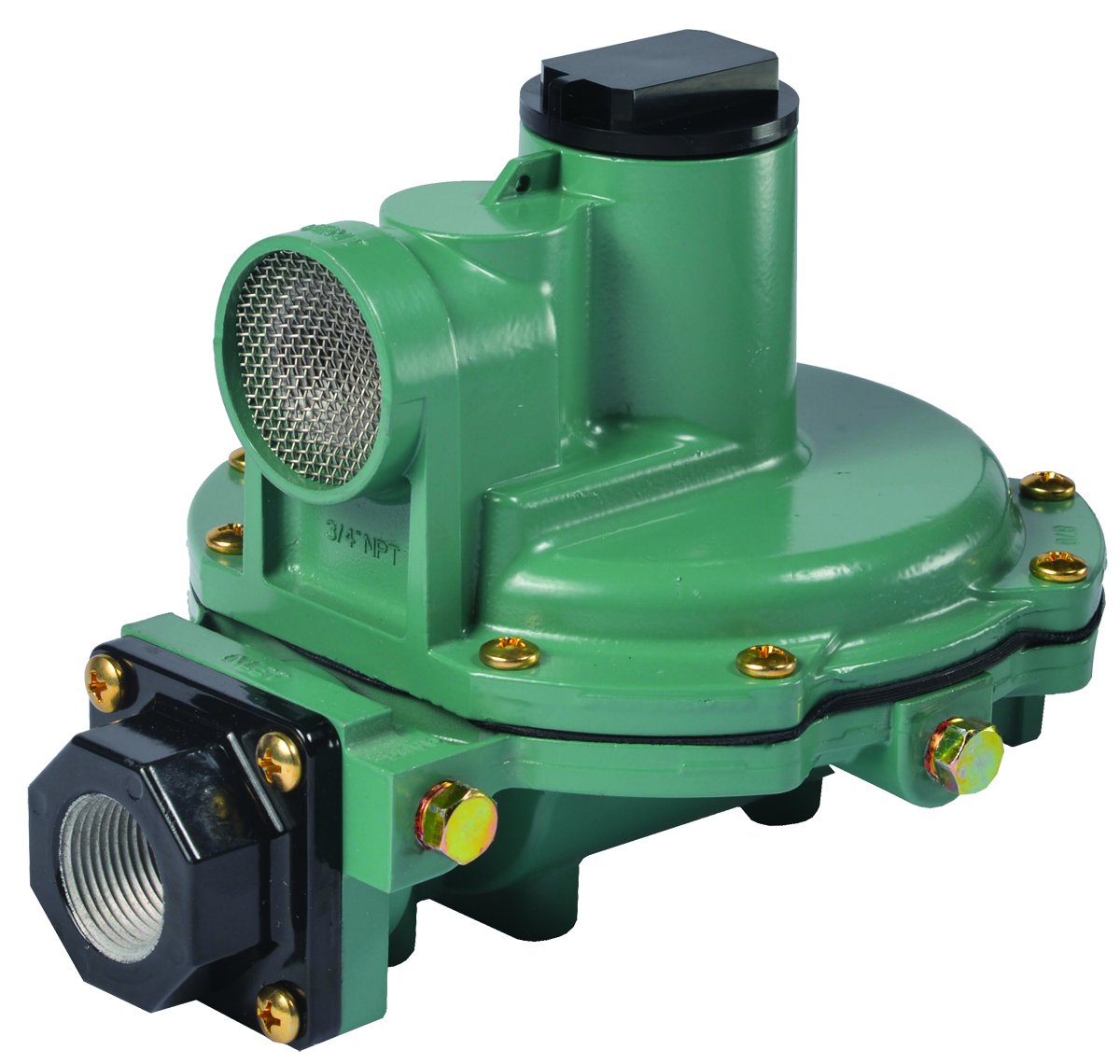
If you’ve ever watched an installer crouch behind a range and swap out a small brass fitting before everything “finally worked right,” you’ve witnessed the most underappreciated step in a propane range installation: getting the regulator correct. A regulator is the device that takes high-pressure propane from your storage tank — anywhere from 100 to 200 PSI (pounds per square inch) on a full tank — and steps it down to the gentle, steady pressure your range burners actually need, typically around 11 inches water column, or about 0.4 PSI. That gap between tank pressure and appliance pressure is enormous, and the regulator is the entire bridge. Choose or size it wrong and you get weak flames, burner lockouts, sooting, or in the worst cases, overpressure damage to your range’s gas valve. This article walks through the two-stage pressure system most residential and semi-commercial installations use, explains BTU capacity ratings in terms that connect directly to your range specs, and shares the decision points that separate clean first-time installs from the callbacks installers dread.
The Two-Stage Pressure System: Why One Regulator Is Rarely Enough
Most modern propane installations use what’s called a two-stage regulation system. The logic is straightforward once you see it: a single regulator asked to drop pressure from 150 PSI all the way to 0.4 PSI in one step struggles to hold a steady output as tank pressure varies — and propane tank pressure does vary, dropping as the tank cools or empties. Two regulators in series each handle a smaller pressure drop, and the result is dramatically more stable delivery pressure at the appliance.
Stage one (the first-stage regulator, mounted at or near the tank) reduces pressure from whatever the tank is running — typically 100–200 PSI — down to an intermediate pressure, usually 10 PSI. This regulator is almost always integral to the tank’s pigtail connection or mounted directly on the vapor withdrawal valve.
Stage two (the second-stage, or “appliance” regulator) takes that 10 PSI and reduces it further to the appliance delivery pressure, standardized at 11 inches water column (in. W.C.) for propane ranges. This is the regulator most people are actually thinking about when they talk about “the range regulator,” and it’s the one that most commonly gets selected incorrectly.
When is a single-stage regulator acceptable? Per the Propane Education and Research Council’s Propane Appliance Installation Guide (2023), single-stage regulators are appropriate only for small, short-run, low-BTU applications — a portable grill or a very short run from a 20-pound cylinder to a single appliance. For any permanent residential installation, especially a professional-grade range, NFPA 54 (National Fuel Gas Code, 2021) strongly favors two-stage systems because of their pressure stability under varying demand.
One practical note installers report frequently: buying a range that includes a factory-bundled LP conversion kit does not mean that kit includes a full regulator assembly. Most LP conversion kits swap out orifices (the small metered openings inside each burner) and may include an appliance regulator — but that regulator is sized for the range alone. If you’re adding a range to a system that already serves a water heater or a fireplace, you need to think about your entire system’s BTU load, not just the range in isolation.
BTU Capacity Ratings: How to Match Your Regulator to Your Range
Every second-stage regulator carries a BTU capacity rating — the maximum volume of gas it can reliably deliver per hour at rated output pressure. This is where sizing mistakes happen most often, and the math is simpler than it looks.
By the numbers:
| Range type | Approximate total BTU/hr | Minimum regulator capacity |
|---|---|---|
| Entry-level LP (GE, Amana) | 40,000–55,000 BTU/hr | 60,000 BTU/hr regulator |
| Mid-tier (Frigidaire, Samsung) | 55,000–70,000 BTU/hr | 80,000 BTU/hr regulator |
| Professional (Wolf, BlueStar 36”) | 90,000–150,000 BTU/hr | 175,000+ BTU/hr regulator |
| System total (range + water heater + fireplace) | Varies — add all loads | Size to system, not just range |
The rule of thumb used by most licensed plumbers, per NFPA 54 guidance, is to size the regulator to at least 125% of the maximum connected load. That buffer matters because regulators running at or near their rated capacity show pressure sag — exactly the symptom that shows up as lazy, yellow-tipped flames on a high burner.
BlueStar’s published spec sheets for their 36-inch RNB series list burner outputs up to 22,000 BTU/hr per burner, with a total connected load exceeding 130,000 BTU/hr when all burners and the oven are firing simultaneously. Owners of BlueStar ranges on propane consistently report in long-run reviews that undersized regulators are the leading cause of performance complaints in the first year — not orifice conversion issues, not ignition problems, but regulators that can’t sustain pressure under full load. The Cavagna Group’s Two-Stage Regulator Selection and Sizing Technical Reference (2022) recommends installers calculate total system demand at maximum coincident use, not just the range’s nameplate rating.
For off-grid and rural installations where the range may share a line with a propane generator or a demand water heater, the system BTU calculation becomes critical. A 100,000 BTU/hr range sharing a line with an 80,000 BTU/hr generator creates a 180,000 BTU/hr system demand — and a regulator rated for 150,000 BTU/hr becomes a pressure-sag liability the moment both appliances fire at full load simultaneously.
Pressure Settings, Lock-Up, and the Details That Trip Up Installers
Even correctly sized regulators can be misapplied. Here are the specification details that separate clean installations from problem callbacks.
Outlet pressure: 11 in. W.C. is the standard — verify it. The CSA Group’s ANSI Z21.80 standard for line pressure regulators establishes 11 in. W.C. as the standard delivery pressure for LP appliances. Most residential second-stage regulators ship preset to this value, but “most” is not “all.” Adjustable regulators exist for commercial and hybrid-system applications, and if one ends up in a residential installation set to a different pressure, the range will behave erratically. Installers should always verify outlet pressure with a manometer (a simple pressure-measuring tool that connects to the range’s test port) before signing off on an installation. Spec sheets from Wolf and BlueStar both note that their ranges should be commissioned at the appliance’s test port, not assumed correct from the regulator setting.
Lock-up pressure. A well-behaved regulator will “lock up” — hold a stable outlet pressure — when all downstream appliances are off and gas demand drops to zero. NFPA 54 specifies that lock-up pressure should not exceed 125% of the regulator’s set outlet pressure. For an 11 in. W.C. regulator, that means lock-up should be no higher than roughly 13.75 in. W.C. Regulators with excessive lock-up can slowly creep pressure up at the appliance valve when the range sits idle, which over time stresses valve seats. The Gas Appliance Manufacturers Association’s technical bulletin TB-21 identifies “regulator creep” as a contributing factor in a meaningful portion of gas valve warranty claims on premium ranges.
Vent orientation. Every second-stage regulator has a small vent port — usually covered by a rubber or plastic cap — that allows the diaphragm inside to breathe. NFPA 54 requires that vent ports face downward or be equipped with a vent-limiting orifice when installed outdoors, to prevent insects and moisture from entering. Owners who have had their ranges “start fine in summer and misfire in winter” often discover that a horizontally-mounted regulator with its vent facing up has accumulated enough water to partially freeze the vent port. This is a simple installation error with a simple fix, but it only reveals itself under cold-weather conditions.
Pigtail material. The flexible connector between the first-stage regulator and the supply line should be a listed high-pressure pigtail — typically Type 1 POL or ACME-threaded — rated for the pressures on the tank side of the system. Field reports from installers referenced in PERC’s 2023 installation guide note that rubber pigtails from non-LP applications (particularly those originally sold for natural gas appliances) are occasionally misused in LP installations, where propane’s different chemical properties can degrade the rubber over time.
If X, Then Y: The Decision Rules That Matter
If you’re in the middle of an installation, renovation, or a job you’re specifying for a client, here’s how to translate the above into a clean decision sequence.
If your range is a professional-grade unit (Wolf, BlueStar, Bertazzoni 36-inch, ZLINE 48-inch) running as the only propane appliance on a dedicated line: Size your second-stage regulator to 125–150% of the range’s total BTU nameplate rating. Verify outlet pressure at the appliance test port with a manometer before first light. Use a two-stage system regardless of line length.
If your range shares a propane supply with other appliances: Calculate total system maximum coincident load — add all appliance BTU ratings, assume simultaneous full-fire, and size the regulator for the system, not just the range. A single undersized regulator will degrade performance for every appliance on the line.
If you’re specifying a rural, off-grid, or cabin installation where the propane system may be expanded later: Install a regulator rated at 25–30% above your current total system load. The incremental cost difference between a 150,000 BTU/hr and a 200,000 BTU/hr second-stage regulator is typically under $30 — far less than a service call to upgrade after the system is buried in a wall.
If your conversion kit shipped with a regulator included: Confirm its BTU rating against the range’s total output before installing it. Factory-bundled regulators in LP conversion kits are sometimes sized for the range alone and may not be appropriate for a shared-line system.
If you’re troubleshooting weak flames or burner lockout on a range that previously worked: Check outlet pressure at the test port first. A regulator that was correctly sized when installed can develop diaphragm wear or vent blockage over time, causing pressure to sag under load. Replacing a regulator is a $40–$80 fix. Replacing a gas valve — the next component downstream to absorb the abuse — is considerably more.
The regulator doesn’t show up on anyone’s appliance mood board. It doesn’t photograph well. But the installers who’ve done enough propane range work will tell you the same thing: get the pressure regulation right first, and almost everything else on the burner-performance checklist takes care of itself.