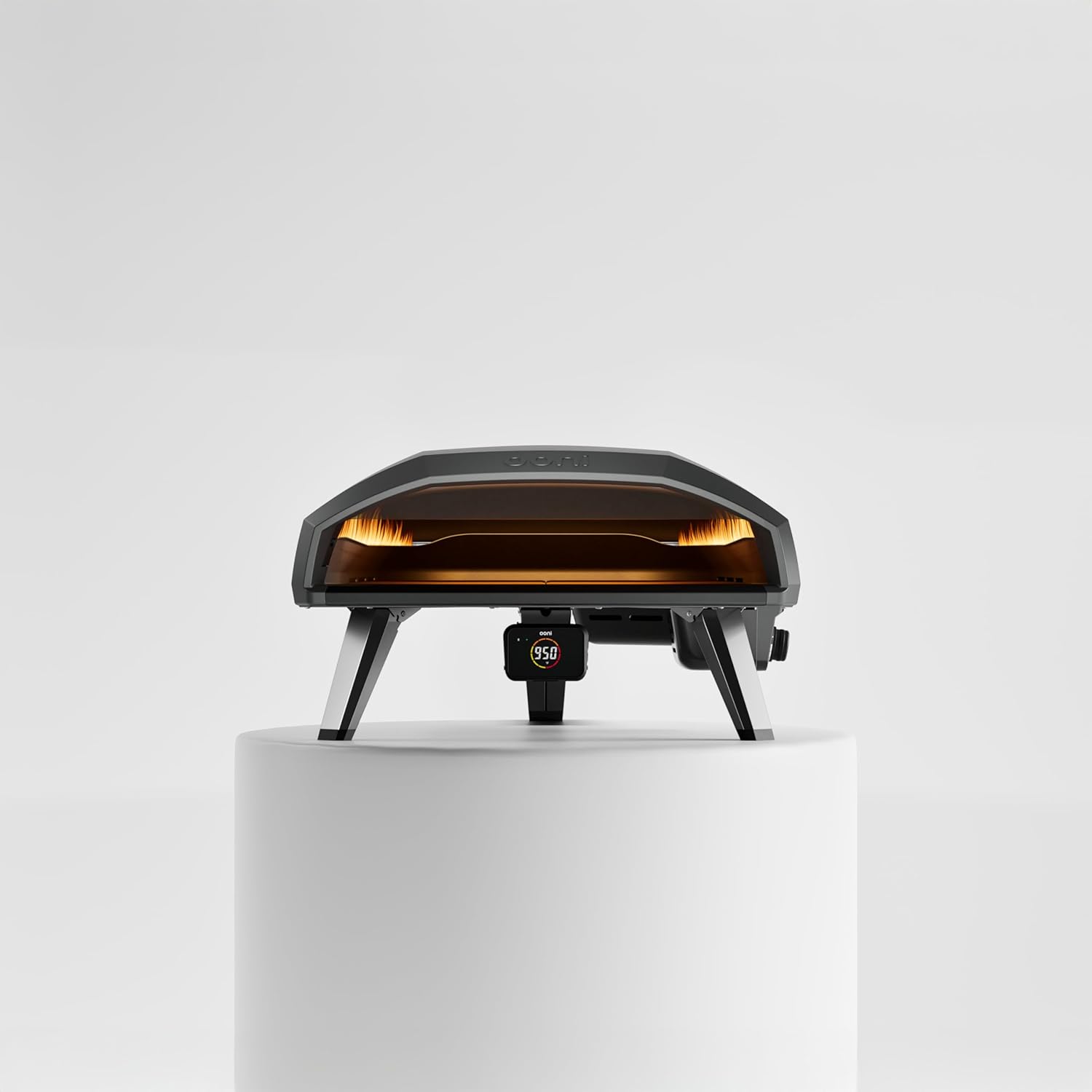
If you’ve been eyeing a propane-powered pizza oven for your outdoor setup — or you’re designing a full outdoor kitchen and trying to figure out what the burner specs actually mean — this guide is built for you. “BTU” stands for British Thermal Unit, which is simply a measure of heat output per hour; the higher the BTU rating, the more heat an appliance can generate. “LP” stands for liquefied petroleum, another name for propane — the pressurized fuel stored in your standard 20-pound tank or bulk tank. A “cooking stone,” also called a baking stone or cordierite deck, is the thick ceramic or stone surface inside a pizza oven that absorbs and radiates heat to crisp a pizza’s bottom crust. These three variables — BTU, stone temperature, and LP fuel quality — define whether your outdoor propane pizza oven produces authentic Neapolitan-style pies at 800°F or disappointingly pale crusts at 550°F. This article walks through the numbers, the tradeoffs, and the decision rules that separate a great setup from a frustrating one.
Why BTU Output Is Not the Whole Story (But It’s the Right Place to Start)
Outdoor propane pizza ovens currently on the market range from roughly 12,000 BTU on the low end — think small portable tabletop models — to 60,000+ BTU on commercial-style standalone units. That spread is enormous, and it creates real confusion when you’re trying to compare spec sheets side by side.
Here’s the frame that matters: BTU output only tells you the potential heat a burner can generate. What actually determines pizza quality is how efficiently that heat is transferred to the cooking stone and the oven chamber. A well-insulated 20,000 BTU oven with a thick cordierite deck and a tight door seal can outperform a poorly designed 40,000 BTU unit with thin walls and heat bleed.
That said, there are BTU thresholds that are practically non-negotiable for propane pizza ovens:
- Under 15,000 BTU: Stone temperatures rarely exceed 650°F under real-world LP supply conditions. You’ll get cooked pizza, but Neapolitan-style char and leoparding (the distinctive dark spots on an authentic crust) won’t happen consistently. These units work for flatbreads, reheating, and casual outdoor cooking.
- 15,000–30,000 BTU: The practical sweet spot for serious home use. Models in this range — including the Ooni Koda 16 at roughly 20,000 BTU, the Gozney Dome at approximately 30,000 BTU — can reach 900°F stone temperatures within 20–30 minutes when fueled by properly regulated LP. Serious Eats’ pizza oven temperature guide identifies 750°F–900°F stone temp as the target range for Neapolitan-style crust.
- 30,000–60,000 BTU and above: Professional and semi-commercial territory. Brands like Alfa Forni and Bertello’s larger footprint models enter this range. Recovery time between pizzas (how fast the stone reheats after you pull a pie) becomes meaningfully shorter — critical if you’re cooking for a crowd.
The LP pressure variable is where many buyers get blindsided. Standard 20-pound propane tanks (also called “DOT cylinders”) regulate gas to approximately 11 inches of water column (WC) — the industry-standard residential LP operating pressure — when paired with a quality regulator. But as tanks approach 20–25% capacity in cold weather (below 40°F), actual delivery pressure can drop below spec. The Propane Education & Research Council (PERC), in their outdoor living guidance documentation, notes that low ambient temperatures significantly reduce a tank’s ability to vaporize propane at rated flow rates. In practice, this means a 30,000 BTU oven burner may behave like an 18,000 BTU burner on a cold evening with a depleted tank. If you’re cooking in variable conditions, a larger bulk tank or a two-tank manifold setup is worth the infrastructure investment.
Stone Temperature: The Variable That Actually Controls Crust Quality
BTU gets you to temperature. Stone temperature is what bakes the pizza.
Cordierite stone — the material used in most quality pizza ovens from Ooni, Gozney, and Alfa — is preferred because it has high thermal mass (it stores and holds heat well) and low thermal shock resistance (it won’t crack when cold dough hits a 900°F surface). The thickness of the stone matters as much as the BTU rating of the burner above or below it.
A 0.6-inch cordierite deck at 800°F will cook a Neapolitan-style pizza in 60–90 seconds. A 0.4-inch stone at the same rated oven temperature will often show uneven bottom browning because the thermal mass isn’t sufficient to maintain consistent temperature through the bake. Food & Wine’s outdoor pizza oven review coverage notes that stone thickness is one of the most consistently mentioned factors in long-term owner satisfaction, particularly for users who cook multiple pizzas sequentially.
By the numbers — typical stone heat-up benchmarks under LP fuel at standard pressure (11” WC):
| BTU Output | Stone Thickness | Estimated Heat-Up to 750°F | Recovery Between Pies |
|---|---|---|---|
| ~12,000 BTU | 0.4 in | 30–45 min | 5–8 min |
| ~20,000 BTU | 0.6 in | 20–30 min | 3–5 min |
| ~30,000 BTU | 0.75 in+ | 15–20 min | 2–3 min |
These benchmarks reflect manufacturer-published specifications and aggregated owner reports — not controlled lab measurements — and will vary based on ambient temperature, wind exposure, and tank fill level.
This is where the outdoor environment creates a variable that indoor range users don’t face: wind load. A 10–15 mph crosswind against an unshielded oven can reduce effective stone temperature by 50–100°F even with the burner at full output. This Old House’s outdoor kitchen planning guide specifically calls out wind orientation as a factor when positioning outdoor cooking appliances. For propane pizza ovens, it’s not just aesthetics — it directly affects fuel consumption and cooking performance.
LP Infrastructure for Outdoor Cooking: Sizing the Supply Side Right
Most consumer propane pizza ovens ship with a 20-pound POL or QCC1 connection that runs directly from a standard portable tank. For a single occasional-use oven, this is fine. When you’re building out an outdoor kitchen — combining a pizza oven, a 4-burner grill, side burners, and a griddle — the cumulative BTU load changes the conversation entirely.
A representative full outdoor kitchen load might look like this:
- 4-burner grill (Lynx, Blaze, Bull): 50,000–80,000 BTU
- Side burner: 15,000 BTU
- Pizza oven: 20,000–30,000 BTU
- Power burner / wok ring: 30,000 BTU
Total potential simultaneous draw: 115,000–155,000 BTU per hour
At that draw rate, a 20-pound portable tank (which holds approximately 430,000 BTU of propane) would deplete in under 3 hours at full output. More practically, a single standard tank cannot maintain adequate pressure and flow for a full-draw scenario across multiple appliances — you’ll see burner flame reduction and inconsistent temperatures across the system.
The correct infrastructure answer at this scale is either a 100-pound DOT cylinder, a permanently installed 120-gallon or 250-gallon LP tank, or a dual-tank manifold with automatic switchover. Consumer Reports’ gas appliance infrastructure guidance notes that undersized supply is a leading cause of field complaints on otherwise well-rated outdoor propane appliances — the equipment performs below spec because the fuel delivery is the constraint, not the burner.
For outdoor kitchen designers working with clients at the Lynx or Blaze tier, this is the conversation that separates a functional installation from a frustrating one. The gas line sizing calculation (using the AGA’s NFPA 54 tables as a reference framework) should happen before appliance selection is finalized, not after.
Picking the Right Propane Pizza Oven: The Decision Framework
Here’s where to land based on your actual use case:
If you’re a serious home cook adding a pizza oven to an existing propane outdoor kitchen: Look at the 20,000–30,000 BTU range. The Ooni Koda 16 and Gozney Dome occupy this tier and draw consistently strong owner reviews for stone temperature consistency and LP fuel efficiency. Owners across aggregated reviews note that the Dome’s double-wall insulation notably reduces the weather sensitivity that plagues thinner-walled competitors. At 2025–2026 retail, these units run $400–$800. The LP infrastructure you likely already have for your grill is usually sufficient if you’re running them standalone.
If you’re designing a full outdoor kitchen from scratch and the pizza oven is a centerpiece: Budget for bulk LP infrastructure first. A 120-gallon or 250-gallon above-ground tank with a dedicated 1/2-inch or 3/4-inch service line to the outdoor kitchen island eliminates the pressure variability problem and lets every appliance perform at spec. At this investment level, consider dedicated propane pizza oven brands with professional pedigree — Alfa Forni’s Classico or 5 Minuti, Fontana Forni’s stainless outdoor models — where stone mass, dome geometry, and BTU are all engineered as a system.
If you’re equipping an off-grid cabin or rural property: The portable 20-pound tank setup is more constrained here — particularly in cold climates. A two-tank manifold with automatic switchover regulator (available from Rego, Cavagna, and Marshall Excelsior) is a low-cost upgrade that meaningfully improves cold-weather performance. Pair it with a 20,000 BTU unit and you’ll have a reliable system even in shoulder-season conditions.
If you’re unsure: The clearest single decision rule is this — if stone temperature consistency across multiple sequential pies matters to you, the stone thickness and insulation quality of the oven body matter more than a BTU number advantage. A 30,000 BTU oven with 0.4-inch stone and thin walls will disappoint next to a 20,000 BTU oven with 0.75-inch stone and insulated double walls, every time.
The Honest Tradeoffs
No propane pizza oven buying guide is complete without naming what LP fuel gets right and where it has a ceiling.
LP does well: It gives you instant ignition, repeatable temperature control, and the ability to run a high-heat oven without the learning curve of wood or charcoal fire management. For outdoor kitchens on propane infrastructure, it integrates cleanly with existing supply systems. PERC’s outdoor cooking data shows LP’s BTU-per-dollar value remains competitive with alternative outdoor fuels in most U.S. regional markets as of mid-2026.
LP has a ceiling: Wood-fired and wood-augmented ovens (like the Gozney Dome’s dual-fuel version) produce flue gases that contribute subtle flavor compounds — particularly from wood combustion — that LP combustion simply doesn’t replicate. If authentic wood-smoke flavor is a priority alongside the convenience of propane, a dual-fuel oven that accepts both LP and wood gives you both. The tradeoff is cost (dual-fuel versions run $300–$500 more) and complexity of setup.
The bottom line: for outdoor cooking performance, LP propane delivers genuine high-heat capability when the supply infrastructure is correctly sized. Get the BTU-to-stone-mass ratio right, protect the oven from wind exposure, size your tank supply for your cumulative load, and a propane outdoor cooking setup competes seriously with any residential alternative on the market today.