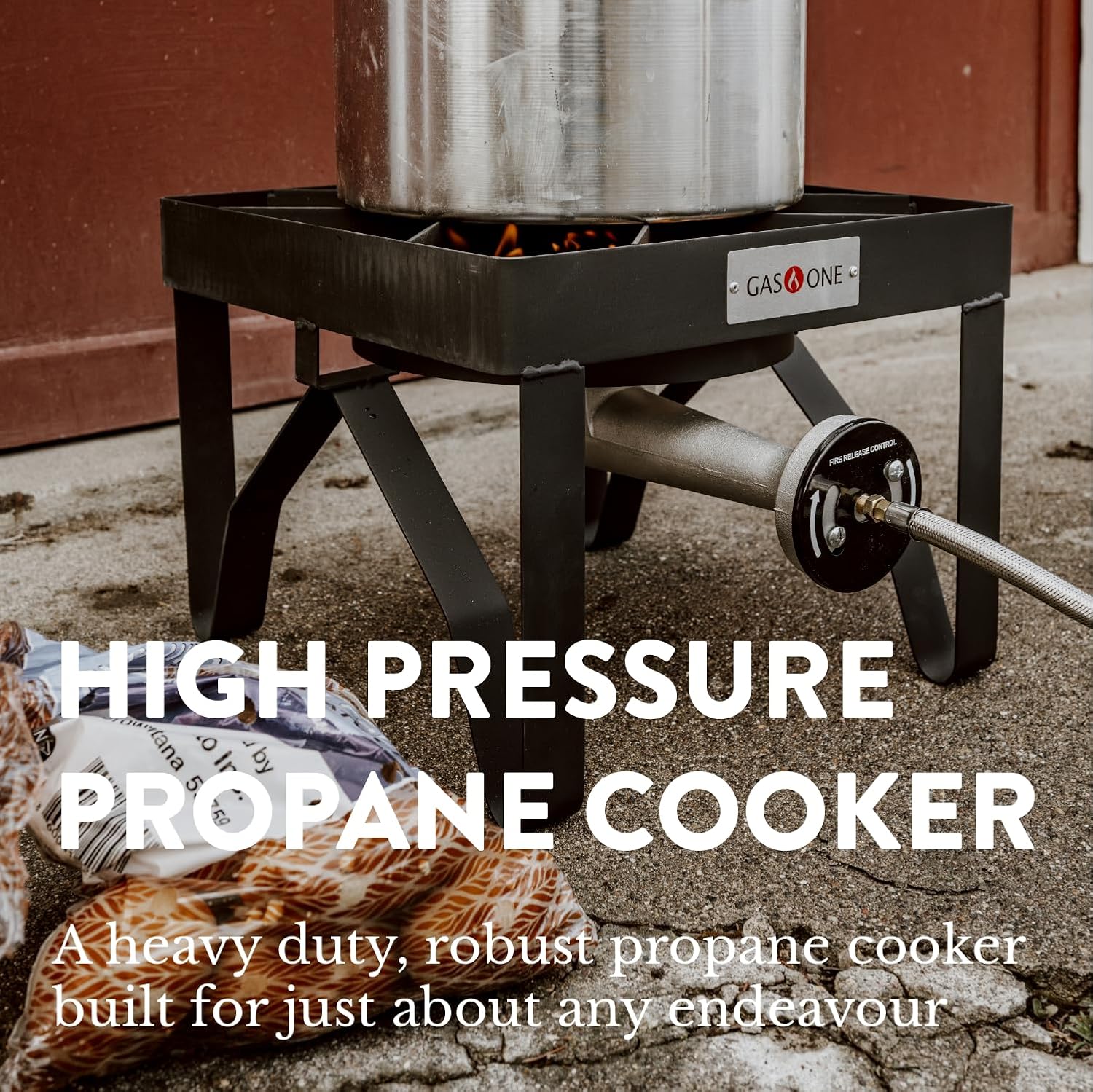
If you’ve ever tried to stir-fry in a screaming-hot wok on a standard kitchen range and ended up with soggy vegetables instead of that smoky, charred restaurant flavor — you already know the core problem. Standard residential burners top out around 12,000 to 18,000 BTUs (BTU stands for British Thermal Unit, the standard measure of how much heat a burner produces per hour). A real wok cook, a home brewer boiling five gallons of wort, or an outdoor kitchen built to entertain a crowd needs something in a completely different league: a freestanding or drop-in outdoor propane burner rated anywhere from 30,000 to 200,000 BTUs. This guide breaks down what those burners actually are, how to match one to your specific use case, and what the spec-sheet numbers mean in practice before you spend $80 — or $800.
| EDITOR'S PICK[ROVSUN 3 Burner Gas Stove with…](https://www.amazon.com/dp/B0FG38KYRD?tag=greenflower20-20) | Mid-tierARC Advanced Royal Champion ARC… | Budget pick[GasOne 200K BTU Propane Burner…](https://www.amazon.com/dp/B071ZM8YVC?tag=greenflower20-20) | |
|---|---|---|---|
| BTU Output | 225000 | 200000 | 200000 |
| Burner Count | 3 | 1 | 1 |
| Regulator | Included | 0-20 PSI | 0-20 PSI |
| Side Shelves | ✓ | — | — |
| Wind Panel | ✓ | — | — |
| Removable Leg | ✓ | — | — |
| Price | $151.99 | $129.99 | $87.99 |
| See on Amazon → | See on Amazon → | See on Amazon → |
BTU Output: What the Numbers Actually Mean for Each Use Case
The BTU number on a burner’s spec sheet is its maximum rated heat output. But raw BTU numbers don’t tell the whole story — what matters is whether a burner can deliver that heat consistently, concentrate it where your cookware needs it, and run stably on standard 20 lb or larger LP cylinders.
Here’s where the tradeoffs start to split by use case:
Wok cooking lives and dies on concentrated, intense heat at the base and sides of the wok. Serious Eats’ coverage of wok technique notes that the “wok hei” flavor — the slightly smoky, caramelized quality — requires temperatures that overwhelm what most home burners can produce. Competitive wok burners purpose-built for this task typically spec between 65,000 and 160,000 BTUs and use a ring-style or “spider” burner design that wraps flame around the wok’s rounded base. The Eastman Outdoor Big Kahuna (manufacturer-rated at 65,000 BTUs) and the high-end outdoor wok burners from brands like Bayou Classic represent the accessible end of this category. Reviewers in aggregated long-run assessments consistently note that ring-style burners above 100,000 BTUs require stable windscreens and thoughtful cylinder positioning to maintain consistent flame at maximum output.
Home brewing is a different demand profile. A five-gallon homebrew boil requires sustained, even heat over 60 to 90 minutes — not the explosive flash-heat of wok work. The American Homebrewers Association’s brewery setup guidance identifies 55,000 to 100,000 BTUs as the practical sweet spot for five- to ten-gallon batch sizes, with anything below 55,000 BTUs producing sluggish time-to-boil on larger volumes. The priority here is fuel efficiency and a wide, even flame pattern rather than peak intensity. Burners marketed toward turkey frying and brewing — the Blichmann Top Tier and the Bayou Classic SP10 line — are designed with this use in mind: wide cast-iron grates, stable three- or four-leg frames, and pressure regulators calibrated for sustained medium-high output rather than max-blast cooking.
Outdoor kitchen integration is a third scenario with different priorities entirely. If you’re dropping a burner into a built masonry or stainless counter alongside a grill and a side burner, the BTU spec matters less than fit, finish, and compatibility with your LP supply infrastructure. This Old House’s outdoor kitchen planning coverage consistently flags the need to size your gas line and regulator for the total BTU load of everything running simultaneously — not just the biggest single appliance.
By the Numbers: BTU Requirements by Use Case
| Use Case | Recommended BTU Range | Typical Fuel Draw (20 lb cylinder) | Key Burner Feature |
|---|---|---|---|
| Wok stir-fry | 65,000–160,000 BTU | 2–5 hrs at max | Ring/spider burner pattern |
| Home brewing (5 gal) | 55,000–100,000 BTU | 4–7 hrs at boil | Wide, even flame; stable frame |
| Turkey fry / outdoor boil | 30,000–60,000 BTU | 5–8 hrs | Tripod stability, high pot support |
| Outdoor kitchen side burner | 15,000–30,000 BTU | 8–12 hrs | Drop-in compatibility, LP line hookup |
Fuel draw estimates based on manufacturer-rated consumption figures at sustained output, not flash peaks.
Regulator Type and Hose Sizing: Where Most Buyers Go Wrong
This is the single most common failure point that owners report across review aggregators, and it’s almost never discussed at the point of sale: the burner and its regulator are not always matched for your use case out of the box.
Propane regulators control the pressure delivered from the LP cylinder to the burner. Most standard portable burners ship with a low-pressure regulator (0.5 psi output, roughly 11 inches of water column) designed for appliances that don’t exceed about 30,000 BTUs at sustained output. If you connect that same regulator to a 100,000-BTU burner and run it wide open, you’ll starve the burner — the flame will sputter, dip, or cycle off entirely as the cylinder’s vapor pressure drops in cold weather or under sustained draw.
High-BTU burners above 55,000 BTUs typically need a high-pressure regulator (0–30 psi adjustable, or a fixed high-pressure output) matched with a hose rated for that pressure. The Propane Education & Research Council’s appliance safety documentation clearly distinguishes between low-pressure (under 2 psi) and high-pressure (2–60 psi) systems and notes that mixing regulator types is both a performance issue and a safety concern.
The practical decision rule: If your burner ships with a 0–30 psi adjustable regulator and a reinforced braided hose (typically 3/8-inch ID), you’re set for high-output work. If it ships with a standard low-pressure regulator identical to what you’d find on a tabletop camp stove, you’re looking at a burner that’s been down-specced for import compliance — and you’ll hit its ceiling quickly.
Owners of the Bayou Classic high-pressure models consistently report that running them on a 40 lb cylinder (rather than a standard 20 lb) dramatically stabilizes flame output during long brew sessions, because the larger liquid volume limits the pressure-drop effect that causes regulator freeze and flame starvation in 20 lb tanks during sustained draws.
Frame, Grate, and Wind Resistance: The Details That Don’t Appear in Ad Copy
Once you’ve confirmed the BTU output and regulator type are right for your use case, the next layer of tradeoffs is physical — and it’s where many buyers of otherwise capable burners end up disappointed.
Frame stability is non-negotiable when you’re supporting a pot of boiling wort or a wok full of oil. Burners in the $60–$120 range often use thin stamped-steel legs that flex under a loaded 8-gallon stockpot. Owners in long-run reviews of entry-level burners consistently flag this as the first point of failure — not the burner itself, but the frame. The Blichmann Top Tier and the KAB6 from Bayou Classic are specifically called out across homebrewing community reviews for frame rigidity; the KAB6’s cast-iron and steel construction has earned a reputation for surviving decade-long use with proper storage.
Grate design matters for wok cooking in a specific way: a standard flat grate doesn’t cradle a round-bottom wok. Dedicated wok burners ship with a removable wok ring — a cast-iron collar that drops into the grate and holds the wok’s curved base stable over the flame. If you’re buying a general-purpose high-BTU burner and plan to use it for wok work, confirm that a compatible wok ring is available for that model before purchasing. Reviewers across multiple platforms note this as an afterthought purchase that should have been first.
Wind is the underrated enemy of outdoor high-BTU cooking. At maximum output, a high-pressure propane flame is turbulent and relatively short — it’s not the tall, lazy flame of a low-pressure burner. In even a moderate crosswind (8–12 mph), that flame can be deflected enough to lose efficiency by 20–30%, according to aggregated operator reports on outdoor brewing forums. If your outdoor kitchen or patio setup is exposed, a three-sided windscreen — either the galvanized folding type sold as turkey-fry accessories or a custom masonry enclosure — is a practical necessity rather than an optional upgrade.
Installation and Code Considerations for Permanent Outdoor Setups
If you’re integrating a high-BTU burner into a fixed outdoor kitchen rather than using a portable unit, NFPA 58 (the Liquefied Petroleum Gas Code, 2024 edition) and your local AHJ (Authority Having Jurisdiction — the local inspector or code official who signs off on your installation) will have jurisdiction over how the LP supply line is run, where the shutoff valve must be located, and what clearances are required from combustibles.
A few points that consistently catch outdoor kitchen builders off guard:
Flexible connectors have length limits. NFPA 58 restricts the use of flexible LP connectors (the corrugated stainless or reinforced rubber hoses that bridge a permanent gas line to an appliance) to appliances that need to move or be serviced. A permanently built-in burner should be hard-piped to a black iron or CSST (corrugated stainless steel tubing) supply line with a dedicated shutoff valve within six feet of the appliance. Owners who skip this step and run long flexible connectors report both code failures on inspection and accelerated connector wear from outdoor UV and heat exposure.
Total BTU load drives line sizing. If you’re running a grill, a side burner, and a high-BTU wok station simultaneously from the same 100 lb cylinder or underground tank, the supply line diameter and regulator capacity must be sized for simultaneous full-load operation. The Propane Education & Research Council’s installation sizing guides provide demand-based charts for this calculation; a licensed LP gas technician can confirm your specific layout is sized correctly before the slab is poured.
The Decision Rule
Here’s the clear cut: If you’re buying a portable burner for occasional wok nights or a homebrew session a few times a year, a 60,000–100,000 BTU unit with a high-pressure adjustable regulator in the $100–$200 range covers the use case well. Spend your remaining budget on a quality wok ring, a wind screen, and a 40 lb cylinder swap from a 20 lb.
If you’re building a fixed outdoor kitchen and want a high-BTU burner as a permanent drop-in component, treat it like any other gas appliance in the infrastructure plan: size the line for simultaneous load, hard-pipe it, add a dedicated shutoff, and pull the permit before the countertop goes in. The burner itself is the cheapest part of that project — cutting corners on the LP infrastructure is where the real cost shows up later.
The burner market at this BTU tier is crowded with look-alike units from overlapping brands. What separates a burner that performs for ten years from one that gets returned after a season is almost always the regulator quality, the frame gauge, and whether the buyer matched the unit to the actual use case before the purchase — not after.