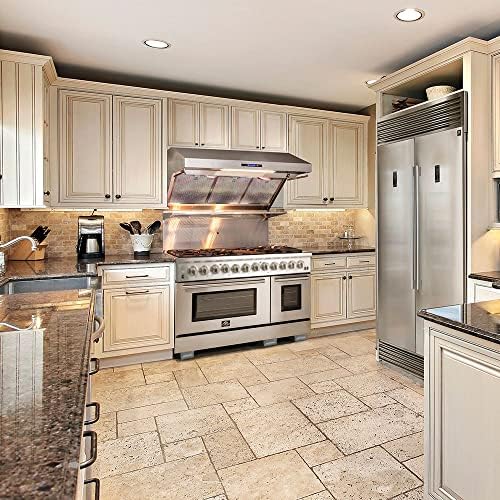
A 48-inch range is exactly what it sounds like: a professional-style cooking appliance that spans four feet of counter space, typically packing six to eight burners on top and two separate oven cavities below. These are the ranges you see anchoring open-concept kitchens in renovation magazines — the kind of centerpiece that defines the room. Running one on propane (also called LP gas, short for liquefied petroleum gas, which is stored in a tank on your property rather than piped in by a utility) changes the calculus in ways the showroom floor rarely explains. Propane burns hotter than natural gas at the orifice but arrives at lower pressure, so every 48-inch range must be converted — fitted with a factory kit that swaps out the small brass fittings called orifices that meter gas flow to each burner. Do that conversion right, and a 48-inch LP range is one of the most capable cooking tools a home cook can own. Do it wrong, or skip the planning entirely, and you’ll have a very expensive appliance that won’t simmer, won’t light reliably, or worse, won’t pass a safety inspection.
This guide is for the buyer who already knows the category and is close to a decision. We’ll cover which platforms handle LP conversion well, what the double-oven configuration actually costs you in BTU terms, how to size the gas line and regulator correctly, and a clear decision framework at the end.
Why 48 Inches Specifically — and What You’re Actually Buying
The jump from 36 inches to 48 inches isn’t just cosmetic. You gain a second oven cavity, typically a full-depth primary oven (4.0–5.0 cubic feet) alongside a secondary oven that might run 1.5–2.5 cubic feet — useful as a warming drawer, a bread proofer, or a genuine second baking chamber if you’re running a holiday spread. The cooktop expands to six or eight burners (some brands substitute one burner position with a griddle or grill insert). And the aggregate BTU load — the total heat output across every burner firing simultaneously, measured in British Thermal Units per hour — climbs sharply.
By the numbers:
- Typical 36-inch range aggregate BTU (all burners): 55,000–70,000 BTU/hr
- Typical 48-inch range aggregate BTU (all burners): 90,000–130,000 BTU/hr
- Minimum recommended supply line size for 48-inch LP range: ¾-inch ID from tank to appliance (per NFPA 54 / ANSI Z223.1 guidelines)
- Standard two-stage LP regulator output: 11 inches water column (WC) — the pressure at which the appliance is rated
Those numbers matter because many rural installations were originally sized for a 30-inch or 36-inch range at 60,000 BTU/hr. Dropping a 120,000 BTU/hr appliance on a ½-inch supply line starves the burners of pressure under heavy load — you’ll see flames that flutter and dip instead of holding a steady cone. The Propane Education & Research Council’s installation guide (PERC, 2024 edition) is explicit: undersized piping is the single most common cause of performance complaints on high-BTU LP appliances.
The LP Conversion Landscape: Which Brands Do It Well
Not all LP conversion kits are created equal. The broad pattern across aggregated owner reviews and installer reports breaks down into three tiers.
Tier 1: Fully engineered LP platforms. BlueStar and Wolf treat LP as a first-class configuration rather than an afterthought. BlueStar’s 48-inch RNB Series ships with a brand-specific LP orifice set for every burner position, including the high-output 22,000 BTU/hr “Nova” burner, and published spec sheets (BlueStar Cooking, 2025) document the exact orifice diameter for each BTU rating at 11 inches WC. Wolf’s DF (dual-fuel) and all-gas 48-inch platforms include a factory LP conversion kit with documented steps for adjusting the pressure regulator — the Wolf LP conversion documentation from 2025 is unusually detailed compared to most competitors, specifying both the orifice swap and a gas valve bypass procedure that many third-party installers overlook. Owners consistently report clean, stable flames across all burner positions after a correctly executed Wolf LP conversion.
Tier 2: Adequate but variable. Bertazzoni’s 48-inch Maserati-series and ZLINE’s 48-inch RA range include LP conversion kits in the box, but installer forums and aggregated reviews flag higher variability in simmer performance post-conversion. The low-fire positions on some ZLINE LP conversions run warmer than ideal for delicate sauces — a known tradeoff that Serious Eats’ buying guide on pro-style ranges notes as a category-wide challenge at lower price points. Both brands are serviceable for serious cooks, but owners who need genuine low-simmer (think 140°F hold without a diffuser) should verify that the conversion kit addresses the simmer orifice specifically, not just the primary flame orifice.
Tier 3: Generic kits with limited documentation. Some 48-inch ranges in the $2,500–$4,000 range arrive with a single-page LP conversion sheet and a bag of unlabeled orifices. These require a licensed LP technician to cross-reference orifice sizing against BTU ratings manually. It’s doable, but it adds installation cost and introduces more room for error. This Old House’s 2024 piece on pro-style range installation flags this exact documentation gap as a reason to build installer labor into the budget before comparing sticker prices.
Double Ovens on Propane: The Hidden BTU Math
Here’s where a lot of buyers get surprised. The two oven cavities in a 48-inch range don’t share a single burner — each has its own bake and broil element (on dual-fuel models) or gas burner (on all-gas models). On a propane all-gas 48-inch range, the primary oven bake burner typically draws 18,000–22,000 BTU/hr, and the secondary oven draws another 12,000–16,000 BTU/hr. Add those to a full cooktop in heavy use and your aggregate demand can hit 150,000 BTU/hr or more.
Dual-fuel versus all-gas on LP is a genuine strategic decision at this size class. A dual-fuel 48-inch range (gas burners on top, electric elements in the ovens) dramatically reduces your LP consumption in oven-heavy cooking sessions and eliminates the conversion complexity for the oven cavities entirely — you only need to convert the cooktop burners. The tradeoff is that dual-fuel requires a dedicated 240V electrical circuit, which adds electrician cost if you don’t have one near the range position. In an off-grid or rural context where the electrical panel is already running at capacity, an all-gas LP range avoids the electrical upgrade but demands more from your propane supply system.
Tank sizing matters more at 48 inches than most buyers plan for. A 48-inch LP range running both ovens plus six burners for a Thanksgiving or dinner-party push will consume propane at rates that can stress a single 100-lb cylinder. PERC’s installation guidelines recommend a minimum 250-gallon tank (or dual 100-lb cylinder manifold with an automatic switchover regulator) for a 48-inch high-BTU range as the primary cooking appliance in a residence. Seasonal property owners who run a 48-inch range intermittently should still budget for at least a dual-cylinder setup — running a high-BTU range on a nearly empty single cylinder causes pressure drop that presents identically to a bad LP conversion, and owners on appliance forums have spent money on service calls before discovering the tank was the culprit.
Installation Realities: Line Sizing, Make-Up Air, and Code
The American Gas Association’s NFPA 54 handbook (2024 edition) sets the baseline for gas line sizing calculations, but the practical application for a 48-inch LP range involves three things most buyers underestimate:
1. Gas line sizing from the tank to the range. At aggregate BTU loads above 100,000 BTU/hr, a ½-inch copper or CSST (corrugated stainless steel tubing) run longer than about 20 feet will create measurable pressure drop under full load. A ¾-inch supply line is the standard recommendation for 48-inch high-BTU ranges, and some BlueStar and Wolf installations at the high end of their BTU range call for 1-inch supply into a ¾-inch final run. Get this spec confirmed with your LP technician before the range is delivered — retrofitting a supply line after the range is installed is significantly more expensive than doing it right the first time.
2. Make-up air requirements. The 2024 updates to NFPA 54 tightened make-up air requirements in tightly sealed homes. A 48-inch commercial-style range with a matched hood — typically rated at 600–1,200 CFM — can depressurize a modern insulated home enough to interfere with combustion or trigger carbon monoxide safety shutoffs on the range itself. A licensed installer needs to calculate the home’s infiltration rate and may specify a make-up air damper or a dedicated fresh-air inlet. This Old House’s 2024 range installation guide covers this calculation in accessible terms and is worth reading before your pre-installation walkthrough.
3. Clearances and ventilation. A 48-inch range almost always requires a custom-depth or extended hood. Manufacturers typically specify a minimum of 30 inches between the cooking surface and the hood capture face, but many installers and the hood manufacturers themselves recommend 36 inches for 48-inch commercial-style ranges. If your cabinet design is already finalized, verify the hood depth before ordering — a 48-inch range with an undersized hood fails both aesthetically and functionally.
The Decision Framework: If X, Then Y
After reviewing the spec landscape, aggregated owner feedback, and installation requirements, the decision tree for a 48-inch LP range looks like this:
If you’re on an established rural propane system with a 250-gallon or larger tank and ¾-inch supply line already in place, the Wolf or BlueStar all-gas 48-inch platforms are the clearest first choices. The LP conversion quality is the best-documented in the category, long-run owner reports are consistently positive, and the installer ecosystem for both brands is mature enough that finding a qualified LP technician with brand-specific experience is realistic in most metro-adjacent markets.
If you’re building a new propane system or upgrading infrastructure, plan the gas line first, not last. Spend the $300–$600 to have an LP contractor size and install the supply line before the range arrives, and get a dual-cylinder manifold or 250-gallon tank into the spec. A Wolf DF 48-inch on a properly sized LP system outperforms an all-gas 48-inch on a compromised supply line every time.
If your electrical panel has available 240V capacity and you’re doing any significant oven-heavy cooking, dual-fuel is the rational choice at this size class. You reduce LP consumption, simplify the conversion (cooktop only), and gain more consistent oven temperature stability from electric elements. Bertazzoni’s dual-fuel 48-inch is the value-conscious choice here; Wolf DF is the benchmark if budget is secondary.
If you’re a seasonal or off-grid owner with a smaller LP footprint, think seriously about whether a 48-inch range matches your actual usage pattern. A 36-inch BlueStar or Wolf with a properly converted LP system will outperform a 48-inch range running on a marginal supply setup — and will do it more reliably over the long run. The 48-inch earns its size in households that entertain frequently and cook simultaneously in both ovens. If that’s not your pattern, the extra 12 inches and second oven add infrastructure complexity without adding proportional cooking value.
The 48-inch LP range is a serious commitment — to supply infrastructure, to installation quality, and to the cooking style that fills all eight burners. Get the infrastructure right first, choose a brand whose LP conversion documentation you can actually read and verify, and the cooking payoff is genuinely exceptional.